Media Integration for Emergency Response Systems | Crisis Communication Enhancement | 2024
Role: UX Research · Interaction Design · Prototyping · Workflow Design
Focus Areas: UX Research · Interaction Design
Overview
Designed a media integration experience connecting emergency incident management systems with communication platforms to support time-sensitive information sharing during crisis response.
Focused on streamlining media transfer workflows, prioritizing critical actions, and supporting communication needs across both emergency incidents and routine public relations operations.
Challenge
Emergency response teams required integration between critical incident management systems and communication platforms.
Time-sensitive emergency communications demanded immediate access to and distribution of media.
Teams managing high-stress incidents needed streamlined workflows to maintain focus on crisis response.
The system needed to support both emergency incidents and daily public relations activities.
The primary challenge was balancing rapid media access and distribution with the operational requirements of emergency communication environments.
Process
Phase 1: Emergency Workflow Research & Analysis
Analyzed emergency response workflows and communication patterns.
Studied National Incident Management System (NIMS) and Incident Command System (ICS) requirements.
Mapped critical paths for media transfer during crisis scenarios.
Phase 2: User Flows & Prototyping
Created user flows optimized for high-stress situations.
Developed prototypes emphasizing speed and accuracy.
Established interaction priorities based on time-sensitive communication requirements.
Phase 3: Stakeholder Review
Conducted stakeholder reviews with emergency response teams.
Evaluated the proposed experience within the context of emergency communication workflows.
Solution
Media Integration Interface
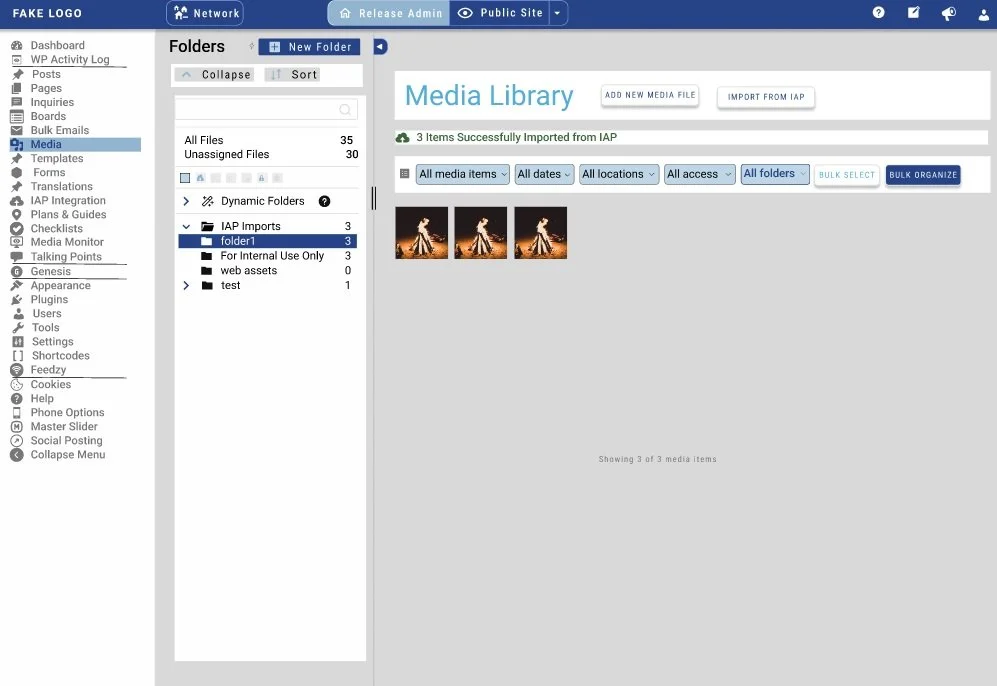
Designed a media import interface connecting incident management and communication systems.
Established a clear visual hierarchy prioritizing critical actions.
Incorporated status indicators for time-sensitive media transfers.
Developed error-handling functionality for critical media assets.
Integrated with existing role-based permissions.
Ensured compatibility with Joint Information Center (JIC) operations.
The solution supported media management across both emergency response scenarios and routine public relations activities.
Interface Design
Impact
Accelerated emergency response communication capabilities.
Enhanced media management during crisis scenarios.
Improved coordination between incident command and communication teams.
Supported both emergency and routine public relations operations.
The project addressed the need for efficient media communication across operational environments with different levels of urgency.
Learnings
Intuitive design is particularly important in high-stress situations.
Understanding emergency response protocols is essential when designing specialized communication workflows.
Rapid information flow plays a critical role in crisis communication.
Effective emergency communication systems require balancing comprehensive functionality with operational simplicity.
Tools & Methods
Figma · Emergency Response Systems · NIMS/ICS Compliance · Crisis Communication Design